

 Vendor Portal

Author: Mark Ainely | Partner GC Realty & Development & Co-Host Straight Up Chicago Investor Podcast
As a Chicago property manager leasing close to 500 units per year, we obviously talk specifics on rents every day, but wanted to share some general data on rental pricing for those trying to figure out what neighborhoods to invest in.
Landlords and investors ask us constantly what rent to set on a unit, and most of what they find online is either a stale citywide average or a number padded with enough fluff to be useless. This article breaks down real Studio through 3 bedroom apartment rent across the 10 largest neighborhoods in Chicago by population, so you can benchmark your own units against something grounded in actual listing data instead of a guess.
Key Takeaways
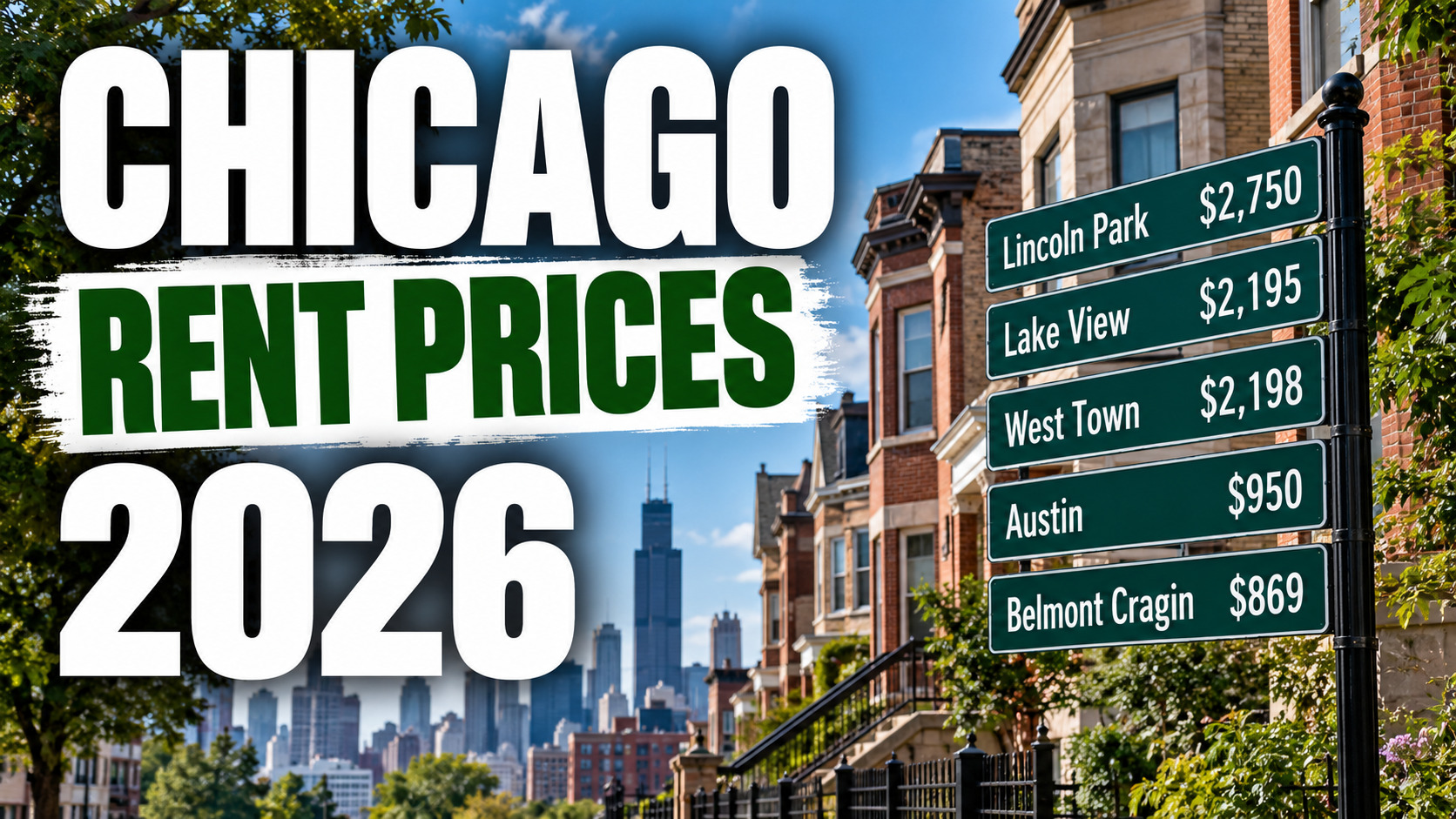
Near North Side, Lake View, and Lincoln Park post the highest apartment rents among the 10 largest neighborhoods, driven by dense downtown and near north submarkets
Austin, Belmont Cragin, and West Ridge post the lowest apartment rents, and also carry the thinnest data, since apartment buildings make up a smaller share of the housing stock there
Near North Side's 3 bedroom figure is skewed by a small number of luxury listings and should be read as ceiling pricing, not a typical unit
South Lawndale (Little Village) outranks Portage Park in population but didn't have confirmable rent data, so we swapped in Portage Park for this table
A few neighborhoods show N/A for studios, meaning there isn't enough tracked studio inventory there to report a reliable number
Want to know exactly what your own property could rent for? Get a free rental analysis from our team before you set a number based on a citywide average.
The 10 Largest Chicago Neighborhoods by Population
| Rank | Neighborhood | Population |
|---|---|---|
| 1 | Near North Side | 104,712 |
| 2 | Lake View | 101,163 |
| 3 | Austin | 98,882 |
| 4 | West Town | 86,598 |
| 5 | West Ridge | 78,227 |
| 6 | Belmont Cragin | 72,918 |
| 7 | Logan Square | 70,869 |
| 8 | Lincoln Park | 67,831 |
| 9 | Near West Side | 66,084 |
| 10 | Portage Park | 61,793 |
Population figures from 2023 Census and CMAP data.
One neighborhood swap worth explaining. South Lawndale (Little Village) actually outranks Portage Park in population, 68,798 versus 61,793. We pulled apartment rent data for South Lawndale from multiple sources and the numbers didn't agree closely enough to publish with confidence, one bedroom estimates alone ranged from roughly $1,200 to $2,400 depending on the source. Rather than present a number that wide as if it were solid, we swapped in Portage Park, the next largest neighborhood with apartment data reliable enough to stand behind. If you're evaluating a property in South Lawndale specifically, pull live comps rather than leaning on a citywide aggregator average.
Population Size vs. Rental Housing Type
We ranked these neighborhoods by population, since that's the standard way to measure the largest areas in Chicago. But population size doesn't tell you how reliable the rent data is going to be.
Near North Side, Lake View, Lincoln Park, West Town, and Near West Side are dense, heavily tracked apartment markets. There's enough rental volume in these areas that Studio through 3 bedroom pricing holds up as a real signal, though even here it's worth watching for outliers. Near North Side's 3 bedroom number, for example, gets pulled up by a small number of luxury listings in Streeterville and the Gold Coast, so treat that figure as ceiling pricing rather than a typical unit.
Austin, Belmont Cragin, and West Ridge are large by population, but the apartment data thins out fast. These neighborhoods lean heavily on bungalows, two flats, and three flats rather than large apartment buildings, so the sample of tracked apartment listings is smaller and the averages move around more from month to month.
So when you're reading this table, weigh the numbers accordingly. In the dense North Side markets, the figures are a solid baseline you can lean on. In neighborhoods like Austin, Belmont Cragin, and West Ridge, treat the numbers as a general range rather than precise numbers, and pull a live comp before setting rent on an actual unit.
Chicago Rent by Neighborhood: Studio Through 3 Bedroom
| Rank | Neighborhood | Population |
|---|---|---|
| 1 | Near North Side | 104,712 |
| 2 | Lake View | 101,163 |
| 3 | Austin | 98,882 |
| 4 | West Town | 86,598 |
| 5 | West Ridge | 78,227 |
| 6 | Belmont Cragin | 72,918 |
| 7 | Logan Square | 70,869 |
| 8 | Lincoln Park | 67,831 |
| 9 | Near West Side | 66,084 |
| 10 | Portage Park | 61,793 |
*Near North Side's 3 bedroom figure is skewed by a small number of luxury listings in Streeterville and the Gold Coast. Read it as ceiling pricing, not a typical unit.
A note on N/A. A few neighborhoods show N/A in the studio column. West Town, Near West Side, and Portage Park all lean toward one bedroom and larger units, so studios make up too small a slice of the rental stock there to generate a reliable average. Where you see N/A, it means there isn't enough studio inventory in that neighborhood to report a number.
Using the 1% Rule to Narrow Down a Neighborhood
If you're an investor trying to figure out which of these neighborhoods to focus on, the 1% rule is a quick first filter worth knowing. It's actually the way I filter what can work for my own buy box before I go any deeper on a deal. The rule is simple. Take the monthly rent a property can realistically get, and check whether it equals at least 1% of the purchase price. A property that costs $200,000 and rents for $2,000 a month hits the mark. A property that costs $200,000 and rents for $1,400 a month does not.
This isn't a rule that tells you whether to buy a property. It's a rule that tells you whether a purchase price and a rent number are even in the same conversation. Use the neighborhood rent figures above alongside a property's asking price, and you'll quickly see which neighborhoods are more likely to pencil out at 1% and which ones will need a lower purchase price, a higher rent, or a different strategy entirely to get there. From there, you still need to run real numbers on taxes, insurance, maintenance, and financing before making a decision, but the 1% rule saves you from spending time on deals that were never going to work in the first place.
Not sure what a specific property would actually rent for in today's market? Get a free rental analysis from our team before you run your own numbers on it.
FAQ
How often should a landlord check rent comps? At minimum, before every lease renewal and every new listing. Rent moves faster in some neighborhoods than others, and a number that was accurate six months ago can already be stale.
What's the difference between asking rent and effective rent? Asking rent is the number on the listing. Effective rent accounts for concessions like a free month or a reduced deposit, spread across the lease term. Two units can list the same asking rent and have very different effective rent once concessions are factored in.
How does this data compare to citywide averages? Citywide averages blend luxury downtown high rises with modest two flats on the far south and west sides, so they tend to sit in the middle of a very wide range. Neighborhood level data gets you much closer to what an actual unit will rent for.
Should I set rent directly off this table? Use it as a starting benchmark, not a final answer. Pull a live comp on your specific block, unit size, and condition before setting a number, especially in the neighborhoods flagged above as having thinner data.
Don't Go At This Alone!
Figuring out the right neighborhood and the right number is only half the work. Actually finding a property that fits, negotiating the deal, and then managing it well enough to hit these rent numbers is where most investors either make their money or lose it.
At GC Realty & Development, we've been doing exactly that since 2003. We currently manage close to 1,500 units across more than 100 municipalities for over 500 private investors, and we still personally invest in residential and industrial real estate ourselves. We've walked through the numbers on far more deals than we've ever bought, and we know what a real buy box looks like versus one built on hope.
My personal mission has always been simple. Help investors build wealth through real estate without getting burned by the mistakes that are so common in this business, and help property owners actually enjoy owning rental property instead of dreading every phone call from a tenant. If you're trying to figure out where to invest in Chicago, or you already own property here and want a management team that treats it like their own, reach out and let's talk.
%20(3)%20(1)_3.png)
_1.png)